Short Answer
A professional lead inspection is a detailed assessment designed to identify the presence of lead-based paint, lead dust, and other lead hazards in a home. During the inspection, a qualified inspector evaluates painted surfaces, performs lead testing using specialized equipment, and may collect dust, paint, soil, or water samples for laboratory analysis. For homeowners in New York, especially those with homes built before 1978, lead inspections provide valuable information before buying, selling, renovating, or maintaining a property.
Introduction
Many homes throughout New York, including communities across the Hudson Valley, were built long before lead-based paint was banned for residential use in 1978. While lead paint may remain hidden beneath newer layers of paint, it can still be present on walls, windows, trim, doors, porches, and other building materials.
For homeowners, home buyers, landlords, and property investors, understanding whether lead hazards exist is an important part of protecting a property’s value and maintaining a safe living environment. This is one reason lead inspections have become increasingly common during real estate transactions and renovation projects.
Whether you are purchasing an older home in Westchester County, preparing to renovate a historic property in Dutchess County, or selling a house in Rockland County, knowing what happens during a lead inspection can help you make informed decisions.
What Is a Lead Inspection?
A lead inspection is a professional evaluation that determines whether lead-based paint or lead hazards are present within a property.
The primary goal is to identify lead-containing materials and assess potential exposure risks. Unlike a standard home inspection, which evaluates the overall condition of a property, a lead inspection focuses specifically on environmental hazards associated with lead.
A standard home inspection may identify peeling paint or damaged building materials. However, it typically does not confirm whether those materials contain lead. A professional lead paint inspection uses specialized testing methods to provide accurate results.
When Should You Schedule a Lead Inspection?
There are several situations where lead testing may be beneficial.
Consider scheduling a lead inspection if:
- You are buying a home built before 1978.
- You are selling an older property.
- You are planning a renovation or remodeling project.
- You discover peeling, cracking, or chipping paint.
- You own a rental property with older painted surfaces.
- You want peace of mind regarding potential lead hazards.
- You are investing in historic properties throughout New York.
Many homeowners searching for “lead inspection near me” are preparing for one of these situations.
Step-by-Step Guide – What Happens During a Lead Inspection?
Understanding the inspection process can help homeowners know what to expect.
Initial Property Assessment
Every lead inspection begins with a visual evaluation of the property.
The inspector conducts a walkthrough and examines painted surfaces throughout the home. Particular attention is given to older building materials, high-friction areas, and locations where paint deterioration may be present.
Common inspection areas include:
- Windows
- Doors
- Baseboards
- Stair railings
- Exterior siding
- Porches
- Garages
- Interior trim
The goal is to identify areas most likely to contain lead-based paint.
XRF Lead Paint Testing
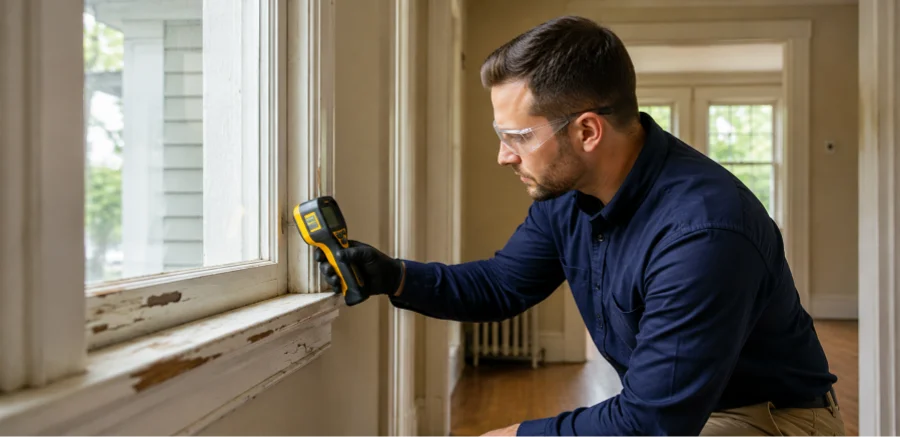
One of the most common methods used during a lead inspection is X-Ray Fluorescence (XRF) testing.
An XRF analyzer is a handheld device that can detect lead beneath painted surfaces without causing significant damage to the material.
The inspector places the device against painted surfaces and receives instant readings that indicate whether lead is present.
XRF testing is widely used because it:
- Provides immediate results
- Minimizes property damage
- Tests multiple surfaces quickly
- Produces highly reliable data
Many lead inspection New York professionals rely on XRF technology because of its efficiency and accuracy.
Paint Sampling
In some situations, paint samples may be collected for laboratory testing.
Paint sampling is often used when additional confirmation is needed or when XRF testing is not appropriate for certain materials.
Small samples are carefully collected and submitted to a certified laboratory for analysis.
Laboratory testing can determine:
- Whether lead is present
- The concentration of lead
- Which surfaces contain lead-based paint
Dust Sampling
Lead dust is one of the most significant concerns in older homes.
As paint ages, deteriorates, or becomes disturbed during renovation, microscopic lead particles can settle on floors, windowsills, and other surfaces.
Inspectors may collect dust wipe samples from:
- Floors
- Window troughs
- Windowsills
- Stairways
The samples are analyzed by a laboratory to determine whether hazardous levels of lead dust exist.
Soil Testing (If Needed)
For some properties, especially older homes, exterior soil testing may be recommended.
Lead contamination can occur from:
- Historic exterior paint deterioration
- Previous renovation activities
- Environmental deposition over many decades
Soil testing helps determine whether lead has accumulated around foundations, gardens, play areas, or landscaping.
Water Testing (Optional)
Although lead inspections primarily focus on paint hazards, some homeowners request water testing.
Older plumbing systems may contain lead service lines, lead solder, or plumbing components that contribute to elevated lead levels in drinking water.
Water testing can provide additional information about overall environmental conditions within the property.
Final Inspection Report
After testing is completed, the homeowner receives a detailed report.
A professional report typically includes:
- Areas inspected
- Testing methods used
- Lead detection results
- Laboratory findings
- Photographs (when applicable)
- Recommendations for further action
The report provides valuable documentation for homeowners, buyers, sellers, and contractors.
Common Areas Where Lead Paint Is Found
Lead paint is most commonly found on older painted surfaces.
Areas frequently identified during inspections include:
- Windows
- Doors
- Interior trim
- Baseboards
- Stair railings
- Porches
- Exterior siding
- Garages
These areas experience regular wear and friction, which can contribute to paint deterioration and lead dust generation.
How Long Does a Lead Inspection Take?
Inspection times vary depending on the property’s size and complexity.
In general:
- Small homes may take 1–2 hours.
- Average residential properties may require 2–4 hours.
- Larger homes or multi-family buildings may require additional time.
Laboratory analysis may take several business days if samples are collected.
How Much Does a Lead Inspection Cost in New York?
Lead inspection costs vary depending on:
- Property size
- Testing methods
- Number of samples
- Inspection scope
Typical residential lead inspections in New York often range from approximately $300 to $1,200 or more.
Larger buildings and comprehensive testing programs may involve additional costs.
While pricing varies, many homeowners consider lead testing a worthwhile investment when compared to unexpected remediation expenses later.
Why Lead Inspections Are Important for Hudson Valley Homes
The Hudson Valley contains many beautiful historic homes and older residential properties.
Communities throughout:
- Westchester County
- Rockland County
- Orange County
- Dutchess County
have thousands of homes built before lead paint regulations changed in 1978.
As a result, lead paint may still exist beneath newer finishes or within original building components.
Lead testing Hudson Valley NY services are commonly requested by:
- Home buyers
- Home sellers
- Landlords
- Real estate professionals
- Contractors
- Property investors
Understanding potential lead hazards helps support informed property decisions.
You might also like: Do I Need Lead Testing Before Buying a Home in New York?
Why Professional Lead Testing Matters
Experience
Environmental professionals routinely inspect older New York homes and understand the construction materials commonly used throughout the region.
Experience allows inspectors to recognize areas where lead paint is most frequently found and identify potential concerns that may be overlooked during a basic property evaluation.
Expertise
Professional inspectors use advanced tools such as XRF analyzers, laboratory-certified sampling methods, moisture detection equipment, and industry-recognized inspection procedures.
These methods provide a higher level of accuracy than DIY testing kits.
Authoritativeness
Lead inspections are performed using established testing protocols and industry standards. Many inspectors follow guidance developed by organizations such as the EPA and utilize accredited laboratories for sample analysis.
Professional reports provide documented findings that can support real estate transactions, renovation planning, and property management decisions.
Trustworthiness
Reliable lead testing helps homeowners make informed decisions based on objective information rather than assumptions. A professional inspection provides transparency and confidence when evaluating potential environmental concerns.
Frequently Asked Questions
What happens during a lead inspection?
A lead inspection typically includes a visual assessment of painted surfaces, lead testing using specialized equipment, and sample collection when needed. Inspectors evaluate areas where lead paint is commonly found and provide a report detailing the results and recommendations.
How accurate is professional lead testing?
Professional lead testing is highly accurate when performed using approved methods such as XRF analysis and laboratory testing. Certified inspectors use industry-standard procedures to provide reliable results.
Is lead testing required before buying a home?
Lead testing is not always required, but many buyers choose to have an inspection performed when purchasing older homes. Testing helps identify potential lead hazards before completing a real estate transaction.
How much does lead testing cost in New York?
Costs vary depending on property size and testing scope. Residential inspections often range from a few hundred dollars to over one thousand dollars for larger or more comprehensive evaluations.
Can lead paint be hidden under newer paint?
Yes. Many older homes have been repainted multiple times over the years. Lead-based paint may remain beneath newer paint layers and may only be identified through professional testing.
How long does a lead inspection take?
Most residential inspections take between one and four hours, depending on the size and complexity of the property.
Should I get lead testing before renovating?
Yes. Renovation activities such as sanding, cutting, scraping, or demolition can disturb lead-containing materials. Testing before renovation helps identify potential hazards and supports safer project planning.
Conclusion
Lead inspections play an important role in helping homeowners understand the condition of older properties throughout New York. Whether you are buying a home, preparing for renovation, selling a property, or managing rental housing, professional lead testing can help identify hidden hazards before they become larger issues.
For homeowners across Westchester County, Rockland County, Orange County, Dutchess County, and the surrounding Hudson Valley region, early testing provides valuable information that supports safer property decisions, smoother real estate transactions, and better renovation planning.
Hudson Valley Environmental LLC provides fast, reliable, and affordable lead testing and inspections across the Mid and Lower Hudson Valley NY.