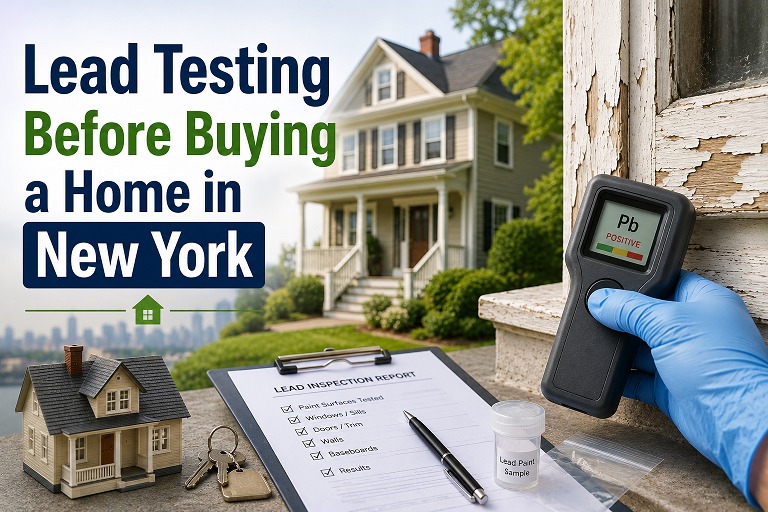
Yes, lead testing is highly recommended before buying an older home in New York, especially if the property was built before 1978. While lead testing is not always legally required during a real estate transaction, it can help identify potential lead paint hazards, protect your family’s health, and prevent unexpected repair costs after closing.
In areas such as Westchester County, Rockland County, Orange County, and Dutchess County, many homes were built decades ago, making lead inspection an important part of the home-buying process.
Why Lead Testing Matters When Buying a Home in New York
Buying a home is a major investment, and most buyers focus on structural issues, roofing, plumbing, and electrical systems during inspections. However, environmental concerns such as lead paint are equally important, especially in older homes throughout the Hudson Valley region.
Lead was commonly used in residential paint before it was banned for consumer use in 1978. Homes built before that time may still contain layers of lead-based paint under newer coatings.Over time, peeling paint, renovation work, friction surfaces, and damaged materials can create lead dust inside the home. This is one reason why many buyers search for lead testing Hudson Valley NY services before purchasing a property.
What Is Lead Paint?
Lead paint is paint that contains lead compounds. It was widely used because of its durability and moisture resistance. Although it is no longer used in residential homes, many older properties still contain original lead-painted surfaces.
Lead paint may be found on:
- Windows and window frames
- Doors and trim
- Walls and ceilings
- Stair railings
- Exterior siding
- Porches and fences
When the paint remains intact, it may not create immediate concerns. Problems often occur when paint starts chipping, cracking, or becoming disturbed during repairs or renovations.
Why Older Homes in New York Often Need Lead Testing
New York has many historic and older homes, especially in communities throughout:
- Westchester County
- Rockland County
- Orange County
- Dutchess County
Because many of these homes were built before 1978, lead paint may still exist inside the property.
Buyers searching for lead inspection near me are often purchasing:
- older single-family homes
- townhouses
- historic properties
- multi-family homes
Even homes that appear renovated may still contain lead paint beneath newer layers.
Is Lead Testing Required Before Buying a Home in New York?
In most residential transactions, lead testing is not legally required before purchasing a home in New York. However, federal law requires sellers to disclose known lead-based paint hazards in homes built before 1978.
Sellers must provide:
- a Lead-Based Paint Disclosure Form
- any known reports or records about lead paint
- an EPA-approved lead information pamphlet
While disclosure is required, sellers may not always know whether lead is present. That is why many buyers choose professional lead paint testing NY services before closing.
You might also like:
Is Mold Testing Required When Buying a Home in New York?
Why Lead Inspection Is Important for Home Buyers
Lead inspection helps buyers make informed decisions about a property. It can also help identify future repair costs and safety concerns.
1. Protects Children and Families
Lead exposure is especially concerning for young children and pregnant women. Lead dust can settle on floors, windowsills, and household surfaces.
Families often schedule lead testing before moving into older homes to better understand the indoor environment.
2. Helps Avoid Unexpected Costs
If lead hazards are discovered after purchase, repairs and remediation can become expensive. Buyers who complete lead inspection before closing may be able to:
- negotiate repairs
- request credits
- better understand future maintenance needs
3. Important During Renovation Projects
Many buyers plan to renovate after purchasing a home. Sanding, drilling, or demolition in older properties can disturb lead paint and create lead dust.
Professional testing helps identify areas that may require special handling during renovations.
What Happens During a Lead Inspection?
Many buyers wonder what the inspection process actually involves.
A professional lead inspection typically includes the following steps.
Visual Assessment
The inspector evaluates painted surfaces throughout the home and looks for signs of deterioration.
Common problem areas include:
- peeling paint
- damaged trim
- friction surfaces such as windows and doors
XRF Lead Paint Testing
Many inspectors use an XRF analyzer, a specialized handheld device that detects lead through painted surfaces without damaging materials.
This method allows inspectors to quickly test multiple areas throughout the home.
Dust Sampling
In some cases, dust wipe samples are collected from floors and windowsills to determine whether lead dust is present.
Laboratory Analysis
Certain samples may be sent to a certified laboratory for additional testing.
Inspection Report
After the inspection, buyers receive a detailed report outlining:
- areas where lead was detected
- levels of concern
- recommendations if needed
This information helps buyers understand the condition of the property before finalizing the purchase.
Common Signs That a Home May Contain Lead Paint
Although testing is the only reliable way to confirm lead paint, there are several warning signs buyers should pay attention to.
Homes Built Before 1978
Older homes are the most common source of lead paint concerns.
Chipping or Peeling Paint
Deteriorating paint can create lead dust and debris.
Renovation History
Homes with unfinished renovations may have disturbed lead-painted surfaces.
Painted Windows and Doors
Friction surfaces often generate dust over time.
If any of these conditions are present, professional lead paint testing NY services may be recommended.
Lead Testing vs Lead Risk Assessment
Many people use these terms interchangeably, but they are slightly different.
Lead Testing
Lead testing determines whether lead-based paint is present in the home.
Lead Risk Assessment
A risk assessment evaluates whether lead hazards currently exist and whether exposure risks are likely.
Risk assessments may include:
- paint condition analysis
- dust testing
- recommendations for corrective action
Both services can provide valuable information during a home purchase.
How Much Does Lead Testing Cost in New York?
The cost of lead testing varies depending on:
- property size
- number of rooms
- type of inspection performed
Typical costs may range from:
- basic lead inspection: $300–$600
- comprehensive testing and risk assessment: $600–$1,200+
Compared to potential remediation costs, testing is often considered a worthwhile investment.
Areas in the Hudson Valley Where Lead Testing Is Common
Lead inspection is commonly requested in cities and towns throughout the Hudson Valley, including:
- Yonkers
- White Plains
- New Rochelle
- Mount Vernon
- Poughkeepsie
- Newburgh
- Middletown
- Nyack
Because many properties in these areas were built decades ago, buyers often search online for lead inspection near me before purchasing a home.
Tips for Home Buyers in New York
If you are buying a home in New York, consider these practical recommendations.
Ask About the Age of the Home
Homes built before 1978 may contain lead-based paint.
Review Seller Disclosures Carefully
Look for information related to past lead testing or remediation.
Schedule Environmental Testing Early
If you suspect potential concerns, arrange inspections during the due diligence period.
Consider Future Renovation Plans
Lead paint can become more hazardous during remodeling projects.
Taking these steps can help buyers make informed decisions and avoid surprises later.
Why Lead Testing Is Becoming More Common
Awareness of indoor environmental safety has increased significantly in recent years. More buyers now understand the importance of checking older homes for:
Because of this growing awareness, lead testing has become a routine recommendation for many older homes throughout New York.
Final Thoughts
So, do you need lead testing before buying a home in New York?
While it may not always be legally required, lead testing is often a smart decision—especially for older homes in Westchester County, Rockland County, Orange County, and Dutchess County.
Professional inspection can help identify hidden lead hazards, protect your family’s health, and provide valuable peace of mind before closing on a property.
For buyers planning renovations or purchasing pre-1978 homes, lead inspection is one of the most important environmental evaluations to consider.Hudson Valley Environmental LLC provides fast, reliable, and affordable lead testing across the Mid and Lower Hudson Valley NY.