Quick Answer
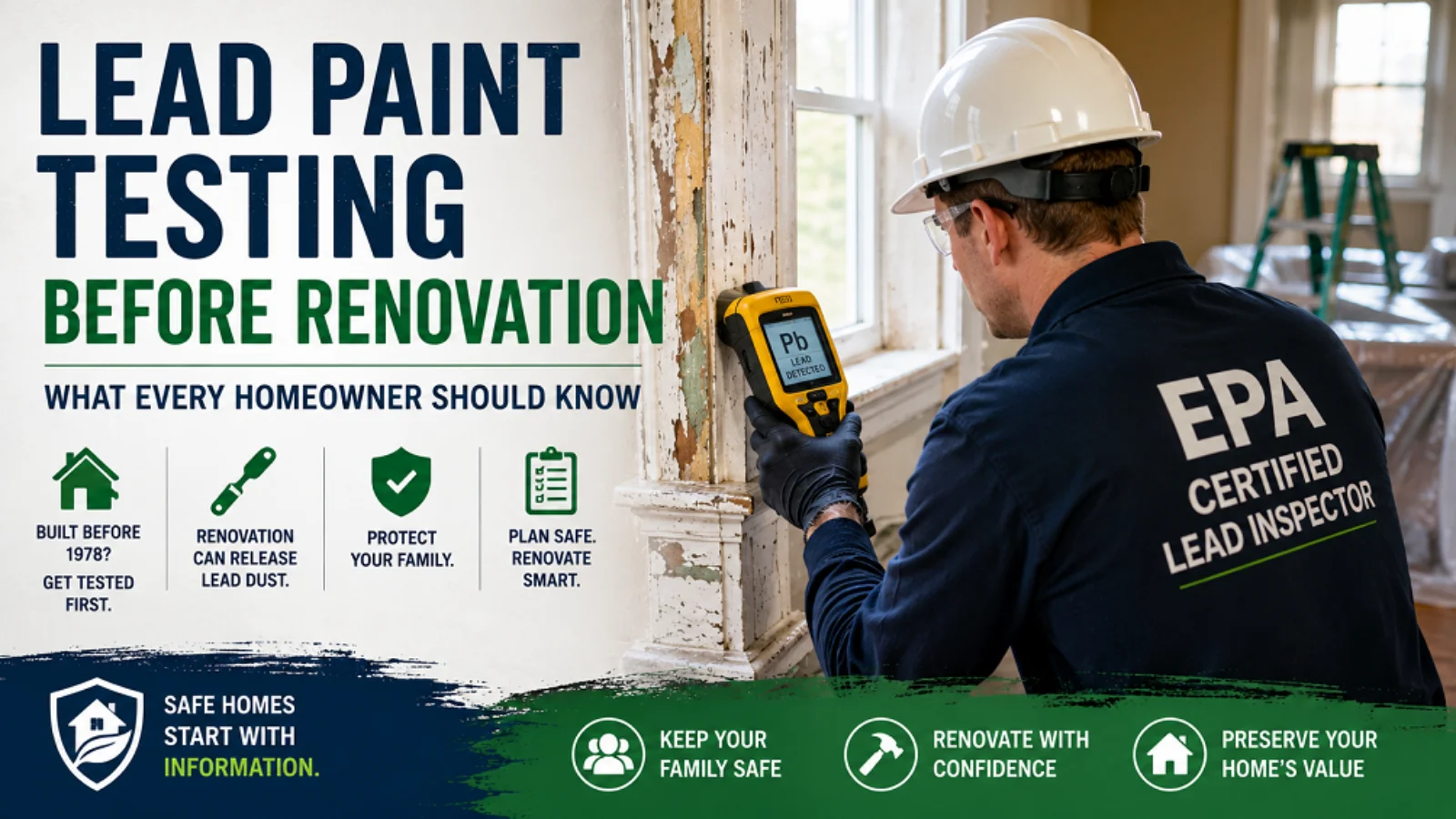
If your home was built before 1978, scheduling lead paint testing before renovation is a smart step. Renovation activities such as sanding, drilling, scraping, demolition, or replacing windows and doors can disturb old lead-based paint and create hazardous lead dust. Professional testing helps homeowners understand whether lead is present, allowing renovation work to be planned safely while reducing unexpected health and property risks.
Planning a home renovation is exciting. Whether you’re updating a kitchen, remodeling a bathroom, replacing old windows, or restoring a historic property, renovations can improve both the comfort and value of your home. However, if your house was built before 1978, there is one important question that many homeowners overlook:
Could there be lead-based paint hiding beneath those old layers of paint?
Across New York, especially in communities throughout the Hudson Valley, many homes were built long before lead-based paint was banned for residential use. Although these homes have been maintained and repainted over the years, original lead paint may still remain underneath newer coatings.
Many homeowners assume that if paint looks clean and well maintained, there is nothing to worry about. Others believe that hiring a contractor automatically addresses any lead concerns. These are common misconceptions.
Lead paint often becomes a concern during renovation, not simply because it exists, but because construction activities disturb painted surfaces. Sanding, scraping, cutting, drilling, demolition, and window replacement can release tiny lead particles into the air. These particles settle on floors, furniture, and other surfaces where they can remain long after the renovation is complete.
For this reason, understanding when lead paint testing Before Renovation is appropriate is an important part of planning any remodeling project involving an older home.
Whether you are a homeowner, homebuyer, landlord, contractor, or real estate professional, learning about lead paint testing before renovation can help you make informed decisions, avoid unexpected project delays, and better protect your investment.
Why Lead Paint Matters During Renovation
Lead-based paint was widely used in residential buildings for decades because it was durable, moisture resistant, and long lasting. Although its use in homes ended in 1978, millions of older properties throughout New York still contain original painted surfaces.
Lead paint is not always dangerous simply because it exists. In many cases, it remains covered beneath several newer coats of paint and stays relatively undisturbed for years.
The situation changes when renovation begins.
Projects that disturb painted materials can create fine dust containing lead particles. Unlike larger paint chips, this dust is often invisible and can spread throughout the home during construction.
Common renovation activities that may disturb lead paint include:
- Sanding walls or trim
- Scraping old paint
- Drilling into painted surfaces
- Demolition work
- Replacing windows
- Installing new doors
- Removing baseboards
- Cutting drywall
- Exterior siding repairs
- Porch renovations
These projects may appear routine, but if lead-based paint is present, they can generate contamination that extends well beyond the immediate work area.
This is why environmental professionals often recommend evaluating older homes before renovation rather than discovering potential issues after work has already begun.
Intact Paint vs. Damaged Paint
One of the most common points of confusion involves the condition of the paint itself.
Intact paint is generally paint that remains firmly attached to the surface without peeling, cracking, blistering, or flaking. While intact lead-based paint may present less immediate risk when left undisturbed, renovation activities can quickly change that.
Deteriorating paint, on the other hand, is already breaking down. Peeling or chipping paint can release dust and paint chips more easily, making damaged areas a higher priority for evaluation before remodeling.
The key point is that renovation—not just deteriorated paint—can create conditions where lead becomes a concern.
Which Homes Should Be Tested Before Renovation?
Not every renovation project requires the same level of evaluation. However, certain types of properties are much more likely to benefit from professional lead paint testing.
Homes Built Before 1978
The most important factor is the home’s age.
If your house was constructed before 1978, there is a possibility that lead-based paint was used on some interior or exterior surfaces. Even if previous owners have painted over the original finish, lead may still remain beneath newer layers.
This doesn’t necessarily mean your home has a hazardous lead condition. It simply means that testing can provide valuable information before renovation begins.
Historic Homes
Historic homes throughout New York often feature original wood trim, decorative moldings, plaster walls, built-in cabinetry, staircases, and exterior architectural details.
Many of these original features have been painted multiple times over several decades.
If your renovation includes restoring or preserving these historic elements, lead paint testing can help identify where lead-based coatings may still exist before work starts.
Older Rental Properties
Landlords who own older rental homes often schedule lead inspections before making significant repairs or upgrades.
Replacing windows, renovating kitchens, repainting apartments, or repairing deteriorated surfaces are all good opportunities to understand whether lead-based paint may be present.
Knowing this information before construction begins allows renovation projects to be planned more efficiently.
Homes with Multiple Layers of Paint
One indication that a property may contain older paint is the presence of numerous visible paint layers.
You might notice:
- Thick paint buildup around trim
- Paint cracking in several layers
- Older woodwork with repeated repainting
- Decorative molding with many coats of paint
Although multiple paint layers do not automatically indicate lead, they often suggest that portions of the home have remained painted for many decades.
Homes Undergoing Major Remodeling
Large remodeling projects generally disturb more painted surfaces than small cosmetic improvements.
Examples include:
- Complete kitchen renovations
- Bathroom remodeling
- Finished basement renovations
- Whole-home remodeling
- Room additions
- Structural alterations
The more surfaces affected during construction, the greater the value of understanding whether lead-based paint exists beforehand.
Interior Renovations
Interior projects frequently involve cutting, sanding, drilling, or removing painted materials.
Examples include:
- Cabinet replacement
- Drywall installation
- Ceiling repairs
- Flooring replacement
- Trim removal
- Electrical upgrades
- Plumbing modifications
These projects may disturb original painted surfaces hidden behind newer finishes.
Exterior Renovations
Exterior work deserves equal attention.
Projects such as:
- Exterior repainting
- Window replacement
- Siding replacement
- Porch restoration
- Deck construction
- Roof repairs affecting painted trim
- Fascia replacement
may disturb decades-old exterior paint that has remained largely untouched.
Professional lead paint testing before exterior renovations provides homeowners with a better understanding of potential conditions before contractors begin work.
One of the most common concerns in older New York homes is lead-based paint. Lead Testing Checklist for Home Buyers in New York.
When Should You Schedule Lead Paint Testing Before Renovation?
Timing is one of the most important parts of any renovation project. Scheduling testing before construction begins allows homeowners to make informed decisions and avoid unnecessary delays.
Before Interior Remodeling
Whether you’re updating a family room or remodeling your entire first floor, interior projects often disturb painted walls, trim, ceilings, and woodwork.
Scheduling lead paint testing before work starts helps determine whether these surfaces contain lead-based paint so the project can be planned appropriately.
Before Kitchen Renovation
Kitchen remodeling typically involves removing cabinets, cutting drywall, replacing flooring, upgrading electrical systems, and installing new plumbing.
Many older kitchens contain original painted trim, window frames, and doors that may still have older paint beneath newer finishes.
Testing before demolition helps reduce surprises once renovation begins.
Before Bathroom Renovation
Bathrooms may seem like low-risk areas, but older homes often contain painted window frames, wood trim, doors, ceilings, and wall surfaces that are disturbed during remodeling.
Testing before renovation provides useful information before contractors begin removing fixtures or opening walls.
Before Window Replacement
Replacing old windows is one of the most common renovation projects in older homes.
Window frames, sashes, casings, and surrounding trim often contain multiple generations of paint. Removing or disturbing these components can release fine paint dust if lead-based paint is present.
Lead paint testing before window replacement is often one of the most practical steps homeowners can take when renovating an older property.
Before Door Replacement
Interior and exterior doors, along with door frames and trim, are frequently original to older homes.
Removing, sanding, or modifying these painted surfaces may disturb underlying lead paint. Testing beforehand helps identify potential concerns before construction begins.
Before Exterior Painting
Many homeowners assume repainting is simply a cosmetic improvement. However, preparing exterior surfaces often involves scraping, sanding, or pressure washing loose paint.
If lead-based paint is present, these preparation methods can release contaminated dust around the property.
Testing before exterior painting helps determine the safest approach for surface preparation.
Before Demolition
Partial demolition creates significant dust and debris.
Whether you’re removing walls, ceilings, porches, garages, or additions, understanding whether lead paint exists beforehand allows renovation work to be better planned.
Before Opening Walls
Even projects that seem unrelated to paint—such as installing insulation, upgrading wiring, or relocating plumbing—often require opening painted walls.
Older painted drywall, plaster, trim, and framing materials may all be affected during the work.
Scheduling lead paint testing before opening walls provides greater confidence throughout the renovation process.
Before Removing Old Trim or Baseboards
Original baseboards, crown molding, decorative trim, and stair components are often painted many times throughout a home’s life.
Removing these features without first understanding whether lead paint is present may create unnecessary dust and cleanup challenges.
For homeowners planning restoration work, testing first is often one of the simplest ways to make informed renovation decisions.
What Happens During Professional Lead Paint Testing Before Renovation?
If you’ve never scheduled a lead paint inspection before, you may be wondering what actually happens during the visit. Fortunately, the process is straightforward and designed to provide reliable information about your property without causing unnecessary disruption.
While every home is different, most professional lead paint inspections follow a similar sequence.
1. Initial Consultation
The process usually begins with a conversation about your property and renovation plans.
The inspector may ask questions such as:
- When was the home built?
- Which areas are being renovated?
- Have previous renovations been completed?
- Are there areas with peeling or damaged paint?
- Has the home ever been tested for lead before?
These details help determine which testing methods are most appropriate. Know What Happens During a Lead Inspection? A Complete Guide for New York Homeowners
2. Property Walkthrough
Next, the inspector performs a visual walkthrough of the property.
During this stage, they identify painted building components that may require testing, including original woodwork, windows, trim, doors, ceilings, walls, porches, garages, and exterior siding.
The goal is to understand the layout of the home and identify surfaces most likely to contain older paint.
3. Visual Inspection
A careful visual inspection follows.
The inspector looks for:
- Peeling paint
- Chipping paint
- Cracking paint
- Moisture damage
- Friction surfaces such as windows and doors
- Areas that may generate dust during renovation
Although visual observations alone cannot determine whether paint contains lead, they help identify locations that deserve closer evaluation.
4. XRF Lead Paint Testing
Many EPA-certified inspectors use an X-Ray Fluorescence (XRF) analyzer, one of the most widely accepted tools for identifying lead-based paint.
The handheld instrument is placed against painted surfaces and provides immediate readings without causing significant damage to the property.
XRF testing allows inspectors to evaluate many surfaces efficiently, including:
- Walls
- Doors
- Window frames
- Window sashes
- Baseboards
- Trim
- Crown molding
- Railings
- Exterior siding
Because results are available quickly, homeowners often receive a clearer picture of the property’s painted surfaces during the inspection.
5. Paint Sampling (When Needed)
Some situations require laboratory paint analysis.
A small paint sample may be carefully collected from selected surfaces and sent to an accredited laboratory for testing.
Paint sampling is often used when additional confirmation is appropriate or when specific building components require more detailed evaluation.
6. Dust Sampling
Renovation frequently creates dust.
If there is concern about existing lead dust, the inspector may collect dust wipe samples from areas such as:
- Floors
- Window sills
- Window troughs
- Stair landings
- Frequently used surfaces
Laboratory analysis determines whether lead dust is present.
7. Soil Sampling (If Requested)
Older homes sometimes have exterior soil that has been affected by historic paint deterioration or previous construction activities.
If requested, soil samples may be collected around:
- Foundations
- Play areas
- Gardens
- Walkways
- Drip lines below exterior walls
This information can be useful for homeowners planning landscaping or extensive outdoor renovations.
8. Laboratory Analysis
When paint, dust, or soil samples are collected, they are submitted to an accredited laboratory.
Laboratory testing provides precise analytical results that complement field observations and XRF testing.
9. Written Inspection Report
Once testing is complete, the homeowner receives a detailed report.
Depending on the scope of the inspection, the report may include:
- Areas tested
- Testing methods used
- XRF readings
- Laboratory findings
- Location of lead-based paint
- Areas of concern
- Recommendations for future renovation planning
The report becomes a valuable reference for homeowners, contractors, buyers, sellers, and property managers.
Common Areas Where Lead Paint Is Found
Although every property is unique, inspectors frequently evaluate the following locations in older homes:
- Interior walls
- Ceilings
- Windows
- Window sashes
- Window trim
- Doors
- Door frames
- Baseboards
- Crown molding
- Stair railings
- Porch railings
- Built-in cabinets
- Closets
- Garage doors
- Exterior siding
- Fascia boards
- Decorative wood trim
- Columns
- Exterior porches
These building components often contain multiple layers of paint that may date back several decades.
Common Misconceptions About Lead Paint
Homeowners often hear conflicting advice about lead paint. Clearing up these misunderstandings can help avoid costly mistakes during renovation.
“If I Paint Over It, The Problem Is Gone.”
Applying new paint over old paint does not remove lead.
Fresh paint may temporarily cover the original surface, but future renovations, repairs, or deterioration can expose the underlying lead-based paint.
Professional testing is the only reliable way to determine whether lead paint is present.
“Only Peeling Paint Contains Lead.”
Lead paint does not become lead-free simply because it appears to be in good condition.
Even intact lead-based paint may create hazards when disturbed by sanding, drilling, scraping, demolition, or remodeling activities.
“A Home Inspection Checks for Lead.”
Many buyers assume a standard home inspection automatically includes lead testing.
In reality, home inspections and lead inspections serve different purposes.
A traditional home inspection focuses on the home’s general condition, while a lead inspection specifically evaluates lead-based paint and related hazards.
“DIY Lead Test Kits Are Always Enough.”
Home test kits can sometimes provide useful preliminary information, but they have limitations.
Professional inspections use specialized equipment, established testing methods, and laboratory analysis when needed, providing a more complete understanding of the property’s condition.
“Wearing a Dust Mask Makes Renovation Safe.”
A basic dust mask alone should not be considered a substitute for understanding whether lead paint is present.
Proper planning begins with identifying potential hazards before renovation starts.
Why Lead Paint Testing Is Important Before Renovation in the Hudson Valley
The Hudson Valley is home to thousands of beautiful older properties.
Communities throughout Westchester County, Rockland County, Orange County, and Dutchess County include homes that were constructed decades before lead-based paint was banned for residential use.
Many of these homes have original wood windows, decorative trim, plaster walls, porches, staircases, and exterior siding that have been repainted numerous times over the years.
For homeowners planning renovations, understanding whether these original building materials contain lead paint allows projects to move forward with greater confidence.
Professional lead testing Hudson Valley NY services are particularly valuable when renovating historic homes, purchasing older properties, or restoring original architectural details.
Why Professional Lead Paint Testing Before Renovation Matters
Experience
Environmental professionals who regularly inspect older New York homes understand that no two properties are alike. It’s common to find multiple paint layers on original windows, doors, trim, stair railings, and exterior siding. Renovation projects often uncover older painted surfaces that have remained hidden for decades, making pre-renovation testing a practical step for homeowners.
Expertise
Professional lead paint testing uses proven inspection methods rather than guesswork.
Depending on the property’s needs, inspectors may use:
- X-Ray Fluorescence (XRF) analyzers
- Laboratory paint analysis
- Dust wipe sampling
- Soil testing
These methods provide far more reliable information than relying solely on visual observations or inexpensive DIY kits.
Authoritativeness
Professional inspectors generally follow recognized industry practices and refer to guidance developed by the U.S. Environmental Protection Agency (EPA). Using established inspection methods helps provide consistent, well-documented results that homeowners and contractors can rely on when planning renovation projects.
Trustworthiness
A professional inspection report provides objective information rather than assumptions.
Homeowners can use these findings to:
- Better understand their property
- Plan renovation projects
- Communicate with contractors
- Prioritize repairs
- Make informed long-term maintenance decisions
Having documented information before renovation reduces uncertainty and supports more confident decision-making.
Frequently Asked Questions
Do I need lead paint testing before renovation?
If your home was built before 1978, lead paint testing is a sensible step before beginning renovations that disturb painted surfaces. Projects involving sanding, scraping, demolition, window replacement, or wall removal can release lead-containing dust if lead paint is present. Testing beforehand provides valuable information that helps homeowners plan projects more safely and avoid unexpected issues during construction.
What happens if lead paint is found?
Finding lead-based paint does not automatically mean renovation must stop. The inspection results simply help you understand where lead paint is located and whether additional precautions may be appropriate during renovation. The next steps depend on the condition of the painted surfaces and the scope of your project.
Can I renovate without lead testing?
Some homeowners choose to proceed without testing, but doing so means making renovation decisions without knowing whether lead-based paint is present. Testing beforehand provides useful information that can help avoid surprises and improve renovation planning, particularly in homes built before 1978.
How long does lead paint testing take?
Most residential lead inspections take between one and four hours, depending on the size of the home and the number of painted components being evaluated. If laboratory analysis is required, final results may take additional time after samples are submitted.
Is lead paint dangerous if it is painted over?
Lead paint that is fully covered and left undisturbed generally presents less immediate concern than deteriorated or disturbed paint. However, renovation activities that cut, sand, scrape, or remove painted materials can expose underlying lead paint and generate lead-containing dust.
What areas are usually tested?
Inspectors commonly evaluate windows, doors, trim, baseboards, walls, ceilings, stair railings, exterior siding, porches, garages, decorative molding, built-in cabinets, and other painted surfaces that may be affected by renovation work.
How much does lead paint testing Before Renovation cost in New York?
The cost varies depending on factors such as the size of the property, the number of painted surfaces being tested, and whether laboratory sampling is required. Homeowners should request an estimate based on the specific scope of their renovation project.
Is professional lead testing more accurate than DIY kits?
Professional testing typically provides more comprehensive and dependable results. EPA-certified inspectors use specialized equipment, established inspection procedures, and accredited laboratory analysis when necessary, offering a higher level of confidence than most consumer test kits.
Conclusion
Renovating an older home is an exciting opportunity to improve comfort, functionality, and property value. Taking the time to understand whether lead-based paint may be present before construction begins is an important part of responsible planning.
Professional lead paint testing before renovation helps homeowners identify potential concerns before walls are opened, windows are replaced, or painted surfaces are disturbed. Rather than relying on assumptions, testing provides clear information that supports better renovation decisions and reduces the likelihood of unexpected challenges during the project.
For homeowners across New York—especially those in Westchester County, Rockland County, Orange County, and Dutchess County—early planning can make renovation projects smoother and more predictable.
Hudson Valley Environmental LLC provides fast, reliable, and affordable lead testing and inspections across the Mid and Lower Hudson Valley NY. Schedule an Inspection Now.
Suggested External References
Lead-Based Paint Laws & Regulations | US EPA
Lead Poisoning Prevention – NYC Health
Lead Exposure Symptoms and Complications | Childhood Lead Poisoning Prevention | CDC