You’re buying an older home in Westchester or the Hudson Valley. The inspection seems fine. The roof is aging, the furnace is old, but nothing appears to be a deal breaker.
You proceed with the closing.
Weeks later, the basement drain backs up.
A plumber uses a camera on the sewer line and discovers roots in an old clay joint. Or maybe a crack. Or a pipe that has shifted.
Now, you face a sewer issue you didn’t know about.
This is when the cost of a sewer scope inspection in the Hudson Valley starts to seem minimal.
For many homes, a sewer camera inspection costs $250 to $500. Prices may vary based on the property, access point, inspection length, and what’s included. In the New York area, these inspections show significant price differences.
The key question isn’t whether the inspection costs a few hundred dollars.
It’s what happens if you skip it and end up with a damaged sewer line.
What Does a Sewer Scope Inspection Cost in the Hudson Valley?
For a typical single-family home, $250–$500 is a good starting budget for standalone sewer scope services. However, you should request an exact quote for the specific property.
Prices can change based on details like:
- Is there a cleanout that’s easy to access?
- Can the inspector easily reach the sewer line?
- How far does the camera need to go?
- Is the line heavily blocked?
- Does the service include a video and written report?
- Is extra work needed before the camera can pass through?
These factors matter.
One New York-area service lists residential lateral camera inspections starting at $249–$299 in NYC and Long Island. Another source in White Plains lists inspections around $150–$400. These are reference points, not guaranteed Hudson Valley prices.
So, don’t pick an inspector just because their price is the lowest.
Ask what services you will actually receive.
Why Pay for a Sewer Scope When You Already Have a Home Inspection?
Because they check different things.
New York’s home inspection standards require inspectors to look at accessible plumbing and fixtures but do not require checks on underground drainage systems.
That difference is easy to overlook when buying a house.
A toilet can flush fine.
A sink can drain properly.
A shower can work perfectly.
Yet, there could still be a damaged sewer pipe below.
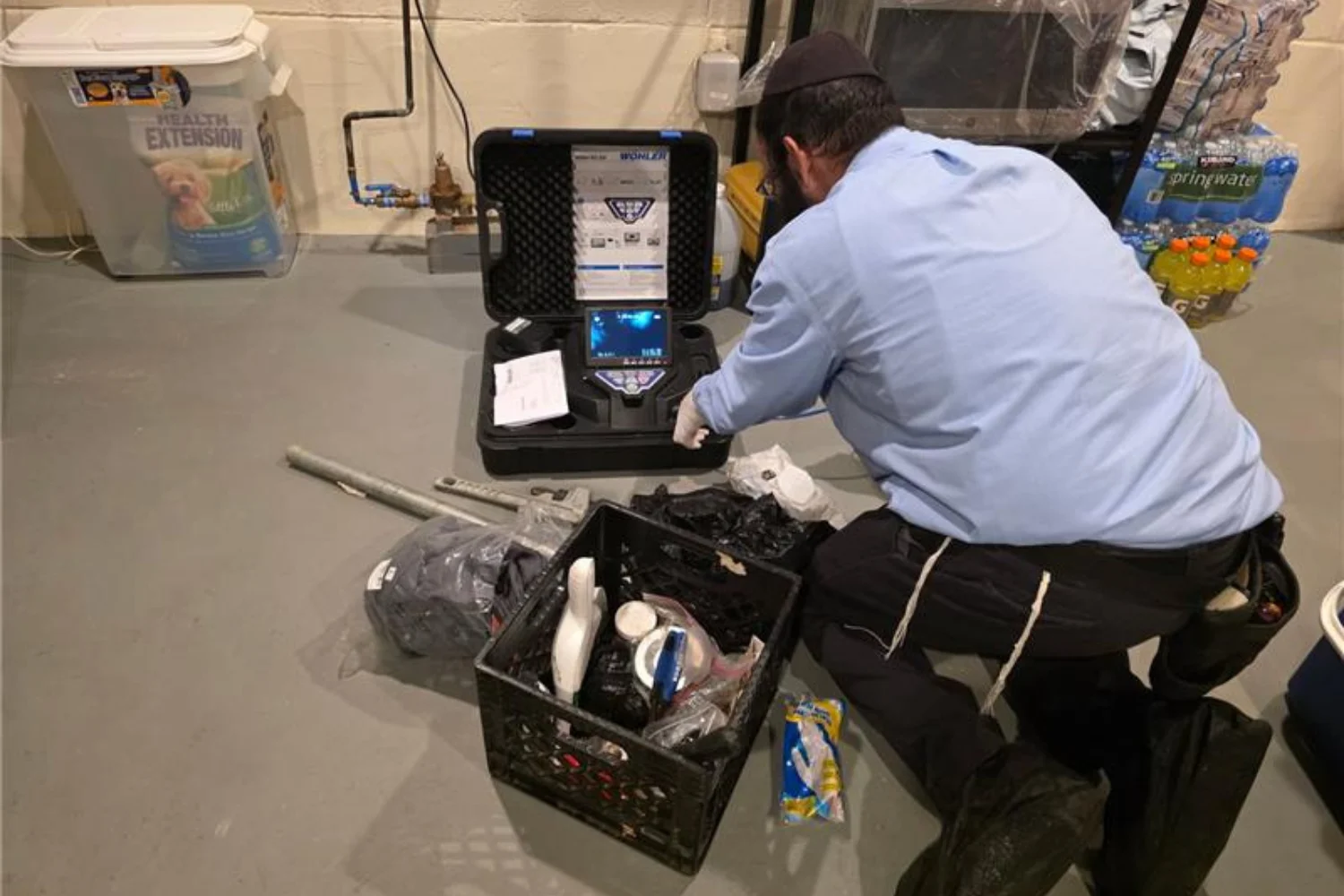
A sewer scope uses a camera to inspect the interior of the sewer line. It reveals conditions that the home inspection might miss.
That’s why a sewer scope is typically a separate inspection.
Why Older Hudson Valley Homes Deserve Extra Attention
Older homes aren’t always problem homes.
Let’s be clear.
Many older Hudson Valley houses have sewer lines that function well for decades.
However, age brings uncertainty about what lies underground.
A home in Poughkeepsie, Newburgh, or an older Westchester area might have plumbing installed many years ago. Depending on the property, you could encounter old clay, cast iron, or other pipe materials.
Then there are the trees.
A mature tree adds charm to an older property but can also send roots toward aging sewer joints.
Once roots invade a pipe, they can block wastewater flow and trap debris.
At first, you may notice nothing.
Then, the drain slows down.
Eventually, you could face a backup.
What Can a Sewer Camera Find?
A sewer scope isn’t just for clogs.
The camera can reveal conditions inside the sewer line, such as:
- Root intrusion
- Cracked pipes
- Broken sections
- Separated joints
- Heavy buildup
- Blockages
- Standing water
- Sagging sections
- Changes in pipe material
- Unusual connections
The findings depend on the line’s condition and how far the camera can travel.
A camera can’t see through a completely blocked section and can’t predict every future failure.
So, treat a sewer scope as an assessment, not a guarantee.
Still, finding issues before closing is much better than discovering them after the sale.
Know more, Sewer Camera Inspection: What It Can Find
What About a Sagging or “Bellied” Sewer Line?
A sewer line should move wastewater efficiently.
If part of the pipe settles, it can create a low section where water collects. This can lead to drainage problems.
A camera may show standing water or a low pipe section.
But don’t rush to assume you need a full replacement.
The importance of this finding depends on the line’s actual condition and what a qualified professional determines after reviewing the results.
The camera reveals what’s visible.
It doesn’t create the repair estimate.
The Real Cost Is the Repair, Not the Inspection
Buyers need to focus here.
A sewer scope might cost a few hundred dollars.
A repair can cost thousands.
A full replacement can be even more, especially with excavation and access issues. Current New York data shows wide price variations in sewer replacements, so a single average repair cost can be misleading.
Consider where the sewer line runs:
- Under a lawn? Not ideal, but easier to excavate.
- Under a driveway? Restoration is now part of the discussion.
- Under a sidewalk? That’s another challenge.
- Under a street or in a crowded area? Complications can increase.
New York properties often make it hard for contractors to dig.
In older neighborhoods, you may also face mature landscaping, hard surfaces, utilities, and limited access.
This is how a simple sewer issue can turn into an expensive project.
Can a Sewer Scope Save You Money When Buying a House?
Potentially, yes.
But the real value isn’t that the camera saves you a specific amount.
The value is information before you commit.
If the sewer camera reveals a serious structural problem, you have something concrete to address.
You can request a plumbing evaluation.
You can get a repair estimate.
You can discuss the findings with your attorney and real estate agent.
Depending on your contract, you may negotiate a price adjustment or seller concession.
That’s a much better position than finding the same issue after closing.
What If the Seller Says the Sewer Has Never Backed Up?
I would still ask for documentation.
The seller might be honest.
Maybe the sewer has never backed up.
That’s good.
But “we’ve never had a problem” doesn’t mean the underground pipe is in good shape.
A sewer line can have roots, cracks, or other issues without frequent backups.
Ask if the line has ever been cleaned.
Ask if any repairs have been made.
Ask if a camera inspection has been done.
If there’s documentation showing a recent replacement, that changes the conversation.
If there’s no information, I’d strongly recommend getting it inspected.
When Should You Schedule the Sewer Scope?
Before closing.
Ideally, schedule it during the inspection period of your purchase agreement.
Don’t wait until you own the property.
If a major defect is found, you’ll need time to evaluate and price it.
You may also need to make decisions by a deadline.
For buyers, timing is crucial.
Is a Sewer Scope Worth 250–500?
For the right property, absolutely.
If you’re buying a newer home with a documented, recently replaced sewer line, your decision may differ.
But if you’re purchasing an older Hudson Valley home and no one knows the condition of the sewer line, don’t view a few hundred dollars as an unnecessary expense.
You’re already making a significant investment in the property.
The sewer scope is about understanding what you’re really buying.
You might also like: Is a Sewer Line Inspection Worth It? Expert Guide
Sewer Scope Inspection Cost in the Hudson Valley: The Bottom Line
A reasonable starting budget for a standalone residential sewer scope is around 250–500. Always confirm the actual price and service scope for the specific property.
The inspection isn’t the expensive part.
The real cost arises when you discover a damaged sewer line after closing.
Tree roots in an old clay pipe. A cracked joint. A collapsed section. A line settled beneath a driveway. A sewer connection requiring major excavation.
These are issues you want to uncover before finalizing the closing paperwork.
So, is a sewer scope inspection worth the cost when buying a Hudson Valley home?
Yes, absolutely.
For a few hundred dollars, you gain insight into one of the most costly parts of a house that you can’t see.
About the Author
Dov Ber Kahn
Senior Consultant & Inspector
Dov Ber Kahn brings years of experience in property inspections, helping homeowners and buyers identify potential problems before they become costly surprises. His work includes evaluating residential and commercial properties throughout New York, with a focus on providing accurate, practical, and reliable inspection information that helps clients make informed decisions.