Short Answer
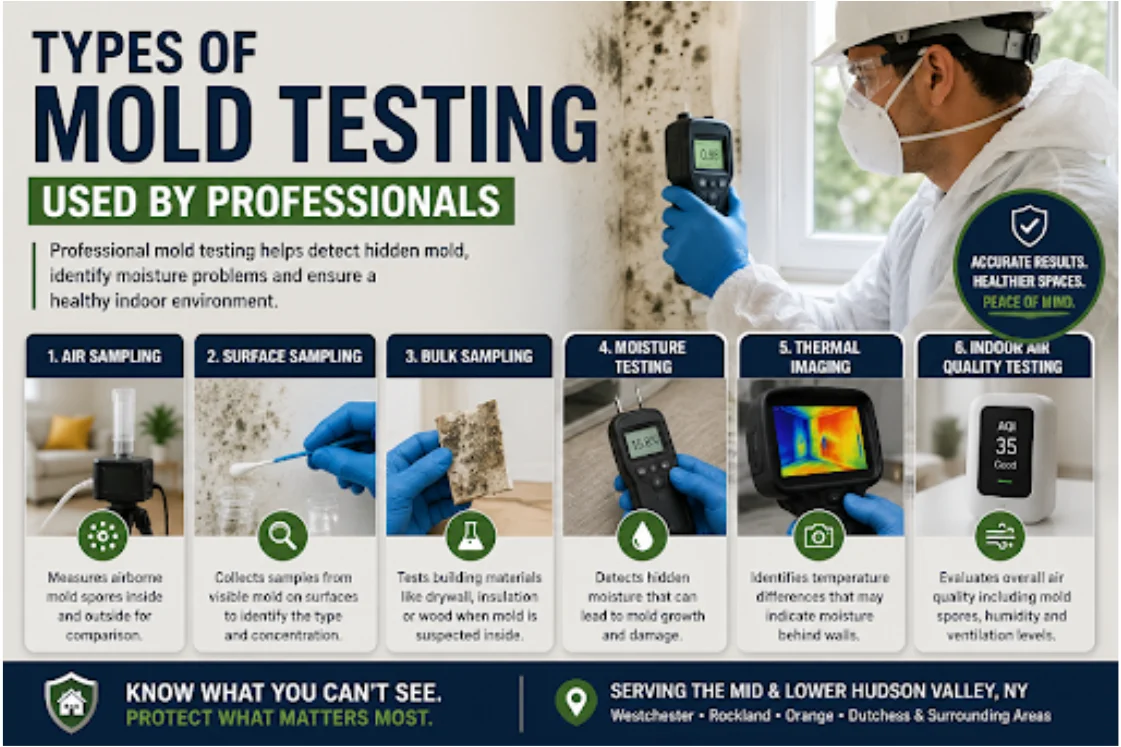
Professional mold testing helps identify mold growth, determine mold spore levels, and locate hidden moisture problems inside a property. Depending on the situation, environmental professionals may use air sampling, surface sampling, bulk sampling, moisture mapping, and other specialized testing methods to evaluate mold concerns. Choosing the right testing method depends on the property’s condition, visible mold growth, water damage history, and indoor air quality concerns.
For homeowners throughout New York and the Hudson Valley region, understanding the different types of mold testing can help you make informed decisions when buying, selling, or maintaining a property.
Why Mold Testing Matters
Mold is one of the most common environmental issues found in homes and commercial buildings. It often develops when moisture remains present for extended periods due to leaks, flooding, humidity, or poor ventilation.
While visible mold may sometimes be easy to identify, many mold problems occur behind walls, beneath flooring, inside HVAC systems, or in areas that are not easily accessible.
Professional mold testing helps determine:
- Whether mold is present
- The type of mold present
- Indoor mold spore levels
- Areas affected by moisture
- Whether remediation may be necessary
For many homeowners searching for mold testing Hudson Valley NY services, testing provides valuable information before making important decisions about a property.
When Is Mold Testing Recommended?
Professional mold testing is commonly recommended when:
- A musty odor is present
- Visible mold growth is suspected
- Water damage has occurred
- A property is being purchased or sold
- Occupants have indoor air quality concerns
- A basement or crawlspace remains damp
- Previous mold remediation was completed
- Renovation work is planned
Testing provides objective information that helps property owners understand the extent of potential mold issues.
1. Air Sampling Mold Testing
Air sampling is one of the most common types of mold testing used by professionals.
During this process, air samples are collected from different areas inside the property and compared with outdoor air samples.
The samples are then analyzed by a certified laboratory to determine:
- Mold spore concentrations
- Types of mold present
- Indoor versus outdoor mold levels
How Air Sampling Works
A specialized pump draws air through a collection cassette. The sample is then examined under laboratory conditions.
This method helps identify airborne mold spores that may not be visible during a visual inspection.
Benefits of Air Sampling
- Detects hidden mold problems
- Evaluates indoor air quality
- Identifies elevated mold spore levels
- Useful when visible mold is not present
Air sampling is frequently used during home inspections and real estate transactions throughout New York.
2. Surface Sampling
Surface sampling is performed when visible mold growth is present on walls, ceilings, floors, or other building materials.
This testing helps determine what type of mold is growing on a particular surface.
Common Surface Sampling Methods
Swab Sampling
A sterile swab is used to collect material directly from a surface.
Tape Lift Sampling
A special adhesive tape collects mold spores from the affected area.
Benefits of Surface Sampling
- Identifies visible mold growth
- Confirms mold species
- Helps determine contamination levels
- Useful for remediation planning
Surface sampling is often used alongside air testing for a more complete assessment.
3. Bulk Mold Sampling
Bulk sampling involves removing a small piece of suspected material for laboratory analysis.
Materials commonly tested include:
- Drywall
- Carpet
- Insulation
- Ceiling tiles
- Flooring materials
- Wood products
Laboratories analyze the material to determine whether mold is present within the building component itself.
Benefits of Bulk Sampling
- Confirms mold inside materials
- Useful when contamination is extensive
- Helps determine remediation scope
This method is commonly used when visible mold is suspected within structural components.
4. Moisture Mapping and Moisture Testing
Mold cannot grow without moisture. Because of this, locating moisture sources is one of the most important parts of a professional mold inspection.
Environmental professionals use moisture meters and specialized equipment to identify hidden water intrusion.
Areas Commonly Tested
- Basements
- Attics
- Bathrooms
- Kitchens
- Crawlspaces
- Exterior walls
Benefits of Moisture Testing
- Identifies hidden leaks
- Detects water intrusion
- Locates conditions that support mold growth
- Helps prevent future mold problems
Moisture mapping often reveals concerns that cannot be seen during a standard visual inspection.
5. Thermal Imaging Inspections
Thermal imaging cameras are frequently used during professional mold investigations.
These cameras detect temperature differences that may indicate moisture behind walls, ceilings, or floors.
What Thermal Imaging Can Identify
- Hidden leaks
- Water intrusion
- Wet insulation
- Moisture behind drywall
Although thermal imaging does not directly detect mold, it helps identify areas that may require further testing.
6. Indoor Air Quality Testing
Many mold investigations include indoor air quality testing.
This broader evaluation may assess:
- Mold spores
- Humidity levels
- Ventilation performance
- Air circulation issues
Indoor air quality testing is particularly useful when occupants report persistent musty odors or indoor comfort concerns.
Which Mold Testing Method Is Best?
There is no single mold testing method that works for every situation.
Professional inspectors typically select testing methods based on:
- Property age
- Visible mold growth
- Water damage history
- Occupant concerns
- Inspection goals
In many cases, multiple testing methods are combined to provide the most accurate evaluation.
For example:
- Air sampling + moisture testing
- Surface sampling + thermal imaging
- Air sampling + indoor air quality assessment
This comprehensive approach often produces the most reliable results.
Why Professional Mold Testing Is Better Than DIY Kits
Many homeowners consider purchasing DIY mold testing kits.
While these kits may seem convenient, they often provide limited information and can be difficult to interpret accurately.
Professional mold testing offers several advantages:
- Certified laboratory analysis
- Professional sampling procedures
- Accurate interpretation of results
- Moisture investigation
- Comprehensive reporting
Most importantly, professionals can help identify the source of the problem rather than simply confirming mold is present.
Mold Testing for Home Buyers
Home buyers throughout Westchester County, Rockland County, Orange County, and Dutchess County frequently request mold inspections before closing.
Testing helps buyers:
- Identify hidden moisture problems
- Understand property condition
- Avoid unexpected repair expenses
- Gain peace of mind
Because many Hudson Valley homes are older properties, mold testing has become a common part of the due diligence process.
Mold Testing for Home Sellers
Sellers can also benefit from mold testing before listing a property.
Pre-listing mold inspections may:
- Improve buyer confidence
- Reduce transaction delays
- Address concerns before negotiations
- Support smoother closings
Environmental testing often demonstrates transparency and preparedness during the selling process.
You might also like: Is Mold Testing Required When Buying a Home in New York?
Why Experience and Expertise Matter
Mold testing should always be performed by qualified environmental professionals who understand building science, moisture behavior, and indoor air quality principles.
Experienced inspectors know where mold is most likely to develop and understand how different testing methods should be applied.
Professional mold inspections typically involve:
- Visual building assessments
- Moisture detection equipment
- Laboratory-certified testing procedures
- Detailed written reports
Property owners should work with companies that have experience inspecting homes throughout New York and the Hudson Valley region, particularly older homes that may have unique moisture challenges.
Choosing a Mold Testing Company
Before scheduling an inspection, consider the following:
- Experience with residential and commercial properties
- Laboratory-certified testing methods
- Detailed reporting practices
- Knowledge of local building conditions
- Transparent pricing and recommendations
Selecting a qualified professional helps ensure accurate results and reliable guidance.
Final Thoughts
Professional mold testing plays an important role in protecting indoor environments and identifying hidden moisture issues before they become costly problems. Depending on the situation, inspectors may use air sampling, surface sampling, bulk sampling, moisture mapping, thermal imaging, and indoor air quality testing to evaluate a property.
For homeowners, buyers, and sellers throughout Westchester County, Rockland County, Orange County, and Dutchess County, understanding the different types of mold testing can help support informed decisions and healthier indoor spaces.
Hudson Valley Environmental LLC provides fast, reliable, and affordable Mold Testing across the Mid and Lower Hudson Valley NY.