Short Answer: Yes—if the home is older, has mature trees nearby, or you want a more complete understanding of the property’s condition. A sewer scope inspection uses a camera to examine the main sewer line and can reveal hidden problems such as cracks, root intrusion, blockages, or collapsed sections that are not visible during a standard home inspection. For many New York home buyers, it is one of the most valuable inspections to consider before closing.
Buying a home is exciting, but it can also be overwhelming. Most buyers focus on the roof, foundation, electrical system, plumbing fixtures, and heating equipment. Those are all important, but there is one part of the property that often gets overlooked because it is hidden underground: the sewer line.
As an environmental and property inspector working with homeowners across New York, I have seen situations where a buyer purchased a home that looked excellent on the surface, only to discover a serious sewer problem shortly after moving in. The repair costs were not a few hundred dollars—they were several thousand dollars.
That is why sewer scope inspections have become increasingly important, especially for older homes.
What Is a Sewer Scope Inspection?
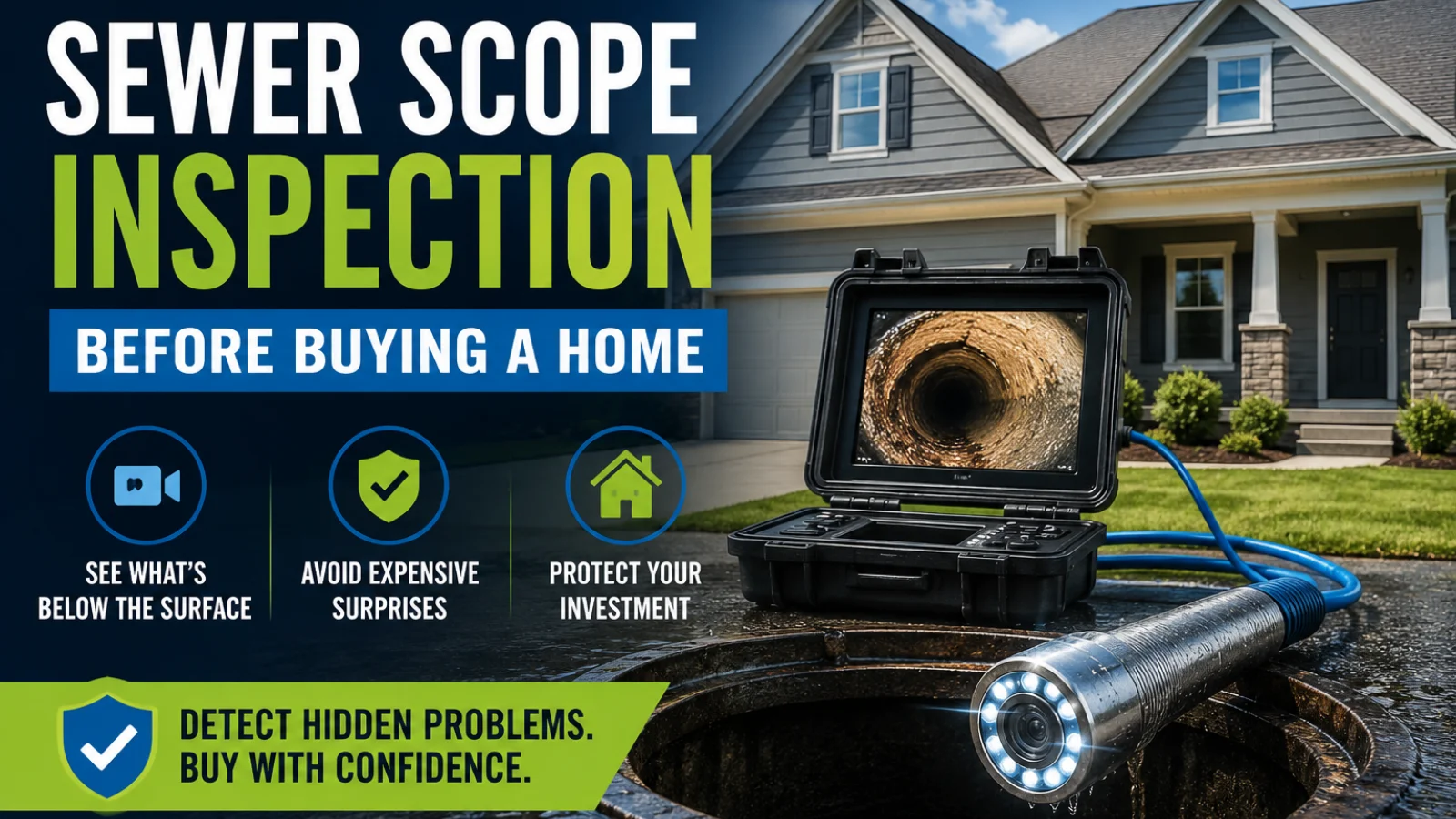
A sewer scope inspection is a specialized inspection of the home’s main sewer line. A small waterproof camera is inserted into the sewer pipe, usually through a cleanout or another accessible point, and the inspector watches the live video feed as the camera travels through the line.
This allows the inspector to see the condition of the pipe from the house to the municipal connection or septic system.
Unlike a standard home inspection, which typically evaluates visible plumbing components, a sewer scope inspection examines the underground piping that cannot be seen during a normal walk-through.
Why Standard Home Inspections Often Miss Sewer Problems
This is one of the biggest misunderstandings among home buyers.
A home inspector may run water at sinks, flush toilets, and check for visible leaks, but that does not guarantee that the sewer line is in good condition. Water can drain normally during the inspection even if the underground pipe has:
- Cracks
- Offsets between pipe sections
- Root intrusion
- Partial blockages
- Corrosion
- Sagging sections (called “bellies”)
- Collapsed areas
These issues may not cause immediate symptoms, especially if the home has been vacant or lightly used.
When Is a Sewer Scope Inspection Most Important?
While I do not believe every home requires every possible inspection, there are situations where a sewer scope inspection is especially worthwhile.
Homes Built Before 1980
Many older homes in New York have clay, cast iron, or Orangeburg sewer pipes. These materials can deteriorate with age.
- Clay pipes are prone to cracking and root intrusion.
- Cast iron pipes can corrode internally.
- Orangeburg pipes (a bituminized fiber pipe used in some areas from the 1940s to the 1970s) can deform, blister, and collapse over time.
If you are buying an older home in the Hudson Valley, Westchester County, Rockland County, Orange County, or Dutchess County, this is one of the first questions I would ask: What type of sewer pipe does the property have?
Properties with Large Trees
Tree roots are one of the most common causes of sewer line problems. Roots naturally seek moisture, and tiny cracks or joints in older sewer pipes can attract them.
I have inspected properties where the plumbing inside the house worked perfectly, but the camera revealed roots filling a significant
portion of the sewer line. The buyers had no idea there was a problem.
Homes That Have Been Vacant
Vacant homes can be deceptive. A sewer line that is rarely used may not show obvious symptoms during a short inspection. Once a family moves in and begins using showers, laundry machines, dishwashers, and multiple toilets daily, hidden problems can quickly become noticeable.
Properties with Previous Plumbing Repairs
If the seller mentions past sewer backups, drain cleaning, root removal, or plumbing repairs, that is a strong reason to consider a sewer scope inspection. Schedule Your Sewer Scope Inspection Today.
What Problems Can a Sewer Scope Reveal?
Here are the issues I most commonly see during sewer camera inspections.
Root Intrusion
Roots enter through joints or cracks and gradually expand inside the pipe. Early-stage root intrusion may be manageable, but severe intrusion can block the line and cause backups.
Cracked Pipes
Cracks can allow wastewater to leak into the surrounding soil and may eventually lead to pipe failure.
Offset Joints
Over time, soil movement can cause sections of pipe to shift. The camera may show one section sitting higher or lower than the next, creating a lip that catches debris.
Corrosion
Cast iron pipes often corrode from the inside. The pipe may appear rough, narrowed, or heavily scaled.
Bellies (Sagging Pipes)
A belly is a low spot where water and debris collect instead of flowing properly. This can lead to recurring clogs.
Collapsed Pipes
In severe cases, the pipe may be partially or completely collapsed, requiring excavation and replacement.
How Much Can Sewer Repairs Cost?
This is the question that gets buyers’ attention.
While costs vary by location and pipe depth, replacing a main sewer line in New York can easily range from $5,000 to $20,000 or more. If the pipe is deep, under a driveway, beneath a patio, or in a difficult location, the cost can increase significantly.
Compared with those potential expenses, a sewer scope inspection is relatively inexpensive.
A Real-World Example
A few years ago, I advised a buyer who was purchasing a 1950s home in the Hudson Valley. The house looked well maintained, and the general home inspection was favorable.
The buyer decided to add a sewer scope inspection. The camera revealed a section of Orangeburg pipe that had begun to deform and collapse. The problem was not causing a backup yet, but it was clearly deteriorating.
Because the issue was discovered before closing, the buyer was able to negotiate a credit toward the future repair. Had the inspection not been performed, the problem likely would have become the buyer’s responsibility after the purchase.
Is a Sewer Scope Inspection Worth It for Newer Homes?
For homes built in the last 10–15 years, the risk is generally lower, especially if the property has modern PVC sewer piping and no history of plumbing issues.
However, I still consider it worthwhile in certain situations:
- New construction with drainage concerns
- Homes where heavy equipment was used near the sewer line
- Properties with unusual grading or settlement
- Homes with recurring drain problems despite being relatively new
What Happens During the Inspection?
The process is usually straightforward and takes about 30–60 minutes.
The inspector will:
- Locate an accessible entry point (cleanout, drain, or other access point).
- Insert the camera into the sewer line.
- Advance the camera through the pipe while recording video.
- Observe the condition of the pipe, joints, and flow.
- Provide findings and recommendations.
Many inspectors also provide a video recording or screenshots of any significant defects.
Questions to Ask Before Hiring an Inspector
Not all sewer camera inspections are the same. Ask:
- Do you provide a video recording?
- Will you identify the pipe material?
- Can you estimate the location of any defects?
- Are you using a self-leveling camera?
- Will the report include recommendations for further evaluation or repair?
My Practical Advice for Home Buyers
If I were advising a friend or family member buying a home in New York, I would consider a sewer scope inspection when:
- The home is 40+ years old
- There are large trees near the sewer path
- The pipe material is clay, cast iron, or Orangeburg
- The property has been vacant
- There is a history of drain or sewer problems
- The purchase price is significant and the buyer wants to reduce hidden risks
For a newer home with modern PVC piping and no warning signs, I might treat it as optional rather than essential.
The Bottom Line
A sewer scope inspection is not the most glamorous part of buying a home, but it can be one of the most informative. It helps uncover problems that are literally hidden underground and often missed by standard inspections.
For many New York home buyers—especially those purchasing older homes in the Hudson Valley, Westchester, Rockland, Orange, or Dutchess counties—the inspection provides peace of mind and a clearer picture of the property’s true condition. Schedule Sewer Scope Inspection in Spring Valley Rockland County NY. and Sewer Scope Inspection in Mount Vernon, New Rochelle, Yonkers Westchester, NY.
No inspection can guarantee that a sewer line will never fail, but discovering major defects before closing is almost always better than discovering them after moving in.
About the Author

Dov Ber Kahn – Senior Consultant & Inspector
Dov Ber Kahn brings years of expertise in property inspections, helping clients identify potential risks before they become costly problems. He regularly advises homeowners, buyers, and property professionals throughout New York on environmental and structural inspection concerns, including sewer line evaluations, lead hazards, mold assessments, and other hidden property conditions that can affect long-term ownership costs.